Wednesday, December 7, 2011

Octogenarians: The Final Saga

So we have come to the end of our class research, blogs and video presentations on these topics. And I'm a little sad about it. I've come to learn a lot about this culture and I know that I will continue to study in my own way what it means to age in all stages of life, including the later stages of life. In a way, I think we all do this on some level. So I would like to begin by including my video presentation from class, it says a lot about this culture:


Here is the link just in case the quality is sketchy on the above video http://www.youtube.com/user/comm211student?feature=mhee


I would like to expand on the various histories and explore the different definitions. As some of you may know from my first class presentation on cultural space and also my first blog entry, I really like studying the definitions of concept words. It really helps me to break them down, understand them and then build them back up. These are not just groups of words, but rather tools that can aid intergenerational and other intercultural communication.

  • political histories: written histories that focus on political events. 

  • intellectual histories: written histories that focus on the development of ideas. 

  • social histories: written histories that focus on everyday life experiences of various groups in the past. 

  • family histories: histories of individual families that are typically passed down through oral stories. 

  • national history: a body of knowledge based on past events that influenced a country's development. 

  • cultural-group histories: the history of each cultural group within a nation that includes, for example, the history of where the group originated, why the people migrated, and how they came to develop and maintain their cultural traits.
These are just the ones that I chose to include in my video, there are many more:

  • absent histories
  • colonial histories
  • diasporic histories
  • ethnic histories
  • gender histories
  • hidden histories
  • racial histories
  • sexual orientation histories
That is a lot of different types of history! This shows that when you are interacting with someone in intergenerational communication, you are interacting with a multitude of factors that shaped that individual's perspective, values and opinions.This can also help when interacting with someone to focus on the histories that most interest you in order to find common ground for conversation and other interaction.

One of the most important pieces of advice for intergenerational communication is that no one perspective is superior or the "right" perspective. Martin and Nakayama (2010) summarize it well that "people bring four elements of personal history to intercultural interactions: childhood experience, historical myths, language competence and memories of recent political events" (pg 155). This really helps me approach an intergenerational interaction with fewer assumptions and a broader perspective. When young and old interact, both bring something to the table. We learn from each other and are shaped in the process. The more I think about the Past/History-Present/Future dialectic, the more I realize that it is a cyclical process. I made a graphic to illustrate this concept:


This way it is more than learning from the past and applying it to the present and the future. Yes that is part of it. But it is also the present giving us perspective on the past and our hopes for the future. They all feed and need each other in order to create a multi-faceted sense of understanding. An analogy is someone in their thirties looking back on their twenties and having a new understanding of the previous events. This is an example of how the past gives us perspective on the past. I am excited about this concept and hope to continue to develop it further. It is a model that reflects the importance of both the young and the old in intergenerational communication.

I think I have figured out how to include an audio interview in here, so this is my interview with my grandma. Although it is a little long she offers a lot of wisdom worth listening to. The first half and the last few minutes are especially applicable to this class if anyone is short on time. Also, as a side note, I would recommend that everyone with beloved grandparents and other elders in their lives to record them while they are here. I did not know how much having my grandma's voice would affect me so much. Please listen respectfully:


I would like to close with a photo of one of my many affirmation cards. This blog and video are dedicated to everyone everywhere who has ever grown a day older, may we all age gracefully in body, mind and spirit.


References

Hay, L. L. (2002). Meditations to heal your life. Carlsbad, CA: Hay House, Inc.
Martin, J. N., & Nakayama, T. K. (2010). Intercultural communication in contexts. New York:
            McGraw Hill Companies, Inc.
Rose, A. (Interviewer) & Dodge, V. (Interviewee). (2011). Personal interview. Retrieved 14 Oct 2011.


Sunday, October 30, 2011

Octogenarians: Past, Present, Future


Is it necessary to understand and have knowledge of the past in order to understand and navigate the present day? Will knowledge of history enhance our vision of and journey into the future? These questions illustrate the intercultural communication concept of one of the six dialectics: history/past-present/future. The textbook for this class defines a dialectic as “a method of logic based on the principle that an idea generates its opposite, leading to a reconciliation of the opposites; the complex and paradoxical relationship between two opposite qualities or entities, each of which may also be referred to as a dialectic.” These concepts stem from the dialectical approach, which challenges us to view things as both x and y even though x and y are polar opposites. I appreciate this lens because I naturally see the world this way.

In terms of my culture of choice – octogenarians – this concept of history/past-present/future presents a question for both those inside and outside of that culture. But before we dissect this question, an exercise:

I would like to present an American Institution that is, technically, part of this culture since it is over eighty years old: The Academy Awards. Yes, you have heard of it because it is impossible not to know of its existence. But what about 83 years ago?


The first Academy Awards ceremony in 1928 was 15 minutes long, awarded previously announced winners and established the silent movie Wings as the first Best Picture (although it was a different category).


 Now The Academy Awards is an event that lasts at least four hours, is televised live in over 200 countries and is much anticipated as unannounced awards change the lives of their recipients.

So what does this have to do with the dialectic and this culture? I will tell you. What was your reaction to learning about the first Academy Award ceremony? What did you think of the drastic change this institution has undergone in eighty-plus years? My reaction was wow, I didn't know that, but now I am glad I know.  For me, learning about the beginning of something helped me see it in a different light. This is how I can illustrate the importance of the concept of history/past and its impact on present/future.

I interviewed my grandparents for this blog, but unfortunately I do not think I know how to upload an audio file on here...unless the one below works. If it does work, please listen respectfully. I will figure it out and use it for my final blog and overall presentation since it is an interview with general questions, not just about this concept. 


One of the things that my grandma talks about in the interview is that society no longer looks to the wisdom and experience of elders for answers, but instead uses technology. This struck a chord in me since I use Google for recipes and Youtube for fixing a flat tire. To me this is a major focal point in improving our intercultural communication with octogenarians (and the senior citizen community in general). My grandma came up with practical solutions such as programs that bring together younger and older generations and these are great ideas. I think that we can also make a change in our thinking by showing this community that they play important and vital roles in our lives and society at large. We can improve our communication by learning from each other on many different levels.

I look forward to continuing to research and present this culture for which I have much affection and respect. I would like to end this blog with a link to a short video clip that combines all of these concepts and institutions. It is from the movie On Golden Pond and shows the scene when one of the main characters has his 80th birthday party.

http://www.anyclip.com/movies/on-golden-pond/birthday-cake-for-norman/

Sunday, September 25, 2011

Octogenarians

What does it mean to be an octogenarian? Merriam-Webster defines octogenarian as a person who is in his eighties. Thank you Webbie for that fine simplified answer to this question. But I want to know what it means on a far more complex level. What is it like to be able to look back on eight decades of your own life and see a cultural and historical timeline of society – of the world – in the process? This is a universal culture since we are all aging. I want to research the role octogenarians play in society, the perspective they have on history and what we can learn from them as elders in our culture.

Why I am interested in this culture:

My grandma turned 80 this year in July and my grandpa will turn 90 at the end of November. This represents the entrance and exit into a culture that is a major transitioning period for many individuals. I have an overall interest in the aging process and elderly people as a culture, but I chose octogenarians for very specific reasons. To me it seems like the decade where physical deterioration increases but mental functioning is still pretty good. This juxtaposition causes – sometimes forces – shifts in priorities in both activities and thinking. When an individual reaches his eighties, he has likely been retired for some time, may have survived the death of a spouse and may be slowing down in some ways. Many of us in our twenties go through experiences and cognition that can be summed up as “finding our identity.” In many ways, each time period of our lives will ask us to redefine our identity. I can see this in the culture of octogenarians, a need to redefine their own worth to society outside of their career and family roles. 


Some famous octogenarians I admire:  

Maya Angelou - 83


Leonard Nimoy - 80


Louise Hay - 84


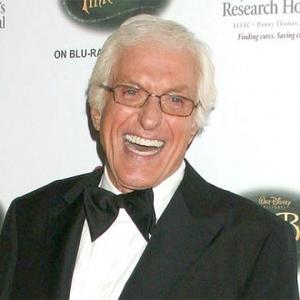
Dick Van Dyke - 85


Projected research methods:

I plan to interview the individuals in my life who are currently part of this culture. I am interested in both the major and minor historical events that impacted their lives, such as air conditioning (minor) and wartime (major). I also plan to research various internet, textbook and campus/community resources regarding the view of this culture in our society. I will address issues such as ageism and the various psychological theories of socioemotional development as an octogenarian. Much of my natural thinking and thus my research has its basis in psychology, especially evolutionary theory, which studies how one generation's decisions affects the next generation's development.

I also want to include various historical time markers and references in order to illustrate the concept of eighty years of one individual's life as well as explore the social and historical context of such a life. In the end I hope to provide accurate and respectful insight into a culture that is often beloved, much admired and sometimes forgotten. 

I will end this first blog of the series with an endearing and entertaining clip of an elderly couple. It is self-explanatory and a fantastic introduction to this culture.